Minerva Australis
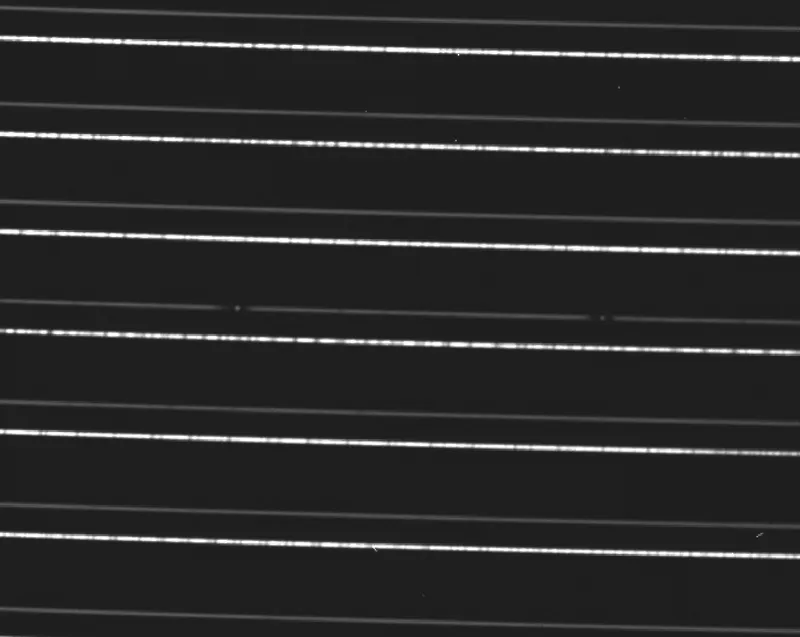
Minerva-Australis at Mount Kent Observatory comprises four Planewave 0.7-meter CDK700 telescopes, and an ASA 0.8-meter telescope that are connected by optical fiber to a stabilized, Kiwistar Optics echelle spectrograph. The focal plane of the spectrograph has an image of the spectrum from the light delivered by the individual telescope fibers, a fiber from an iodine absorption line reference, and a thorium-argon emission spectrum reference. Covering a wavelength range of 480 to 630 nm with a spectral resolution of 70,000, the system yields meter/second radial velocities on stars brighter than g-magnitude 11.
The telescopes operate autonomously on clear nights when the humidity is acceptably low for those exposed in clamshell domes. Individual telescopes may also be configured for photometry, with the potential to do simultaneous multi-band observations on faint stars for TESS exoplanet follow-up, or for transient event science.
Minera Australis is owned by the University of Southern Queensland and is operated by a consortium of partners including UNSW Austalia, the University of Texas at Austin, the University of Florida, George Mason University, the University of California Riverside, MIT, and the University of Louisville.