Shared Skies Planewave CDK20 at Mount Kent
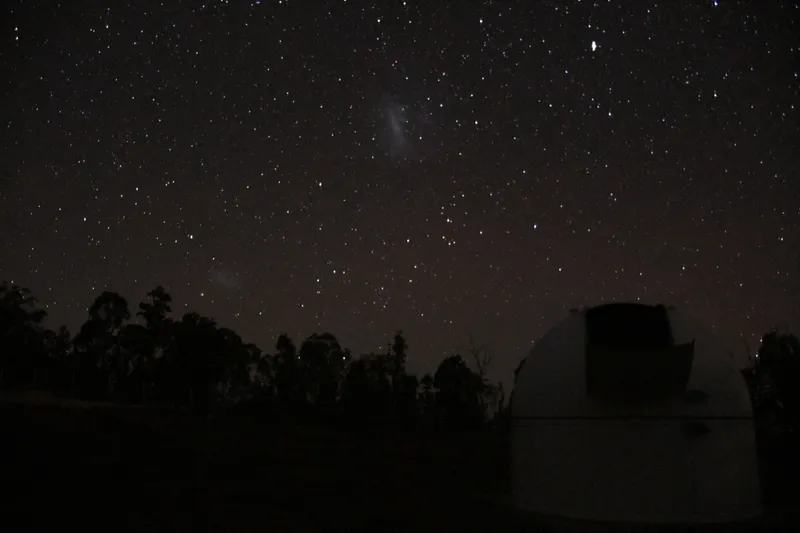
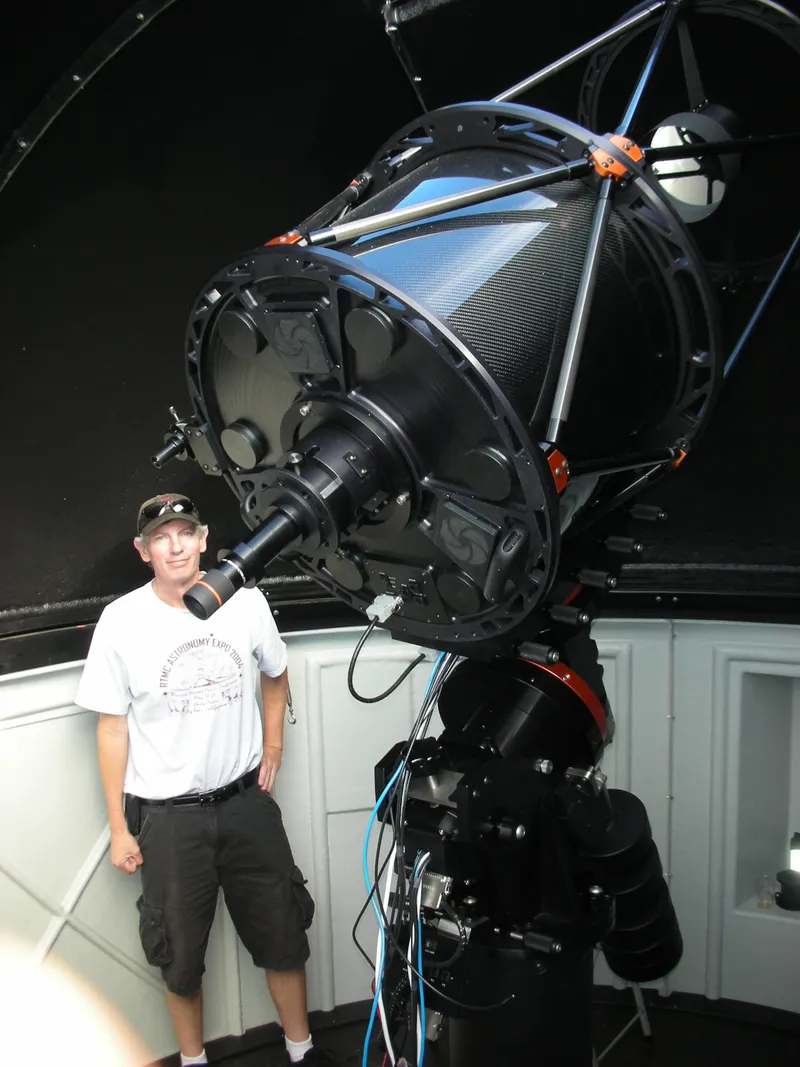
Our 0.5-meter corrected Dall-Kirkham CDK20 at Mt. Kent was an early realization of the optical system designed by Joe Haberman, then at Celestron, and subsequently at Planewave. He joined our team at the site to install the instrument and participate in the first light imaging in April of 2006. Subsequently the mounting seen here was replaced with a Planewave A200HR mount that is equally robust and added precision encoding on the mount axes. With that change, the telescope here at Mt. Kent and its twin at Moore Observatory remain useful for imaging and photometry even after two decades. It has gone through two camera changes since the time of this photo, and a third to add CMOS imaging to the telescope is planned for later in 2026.
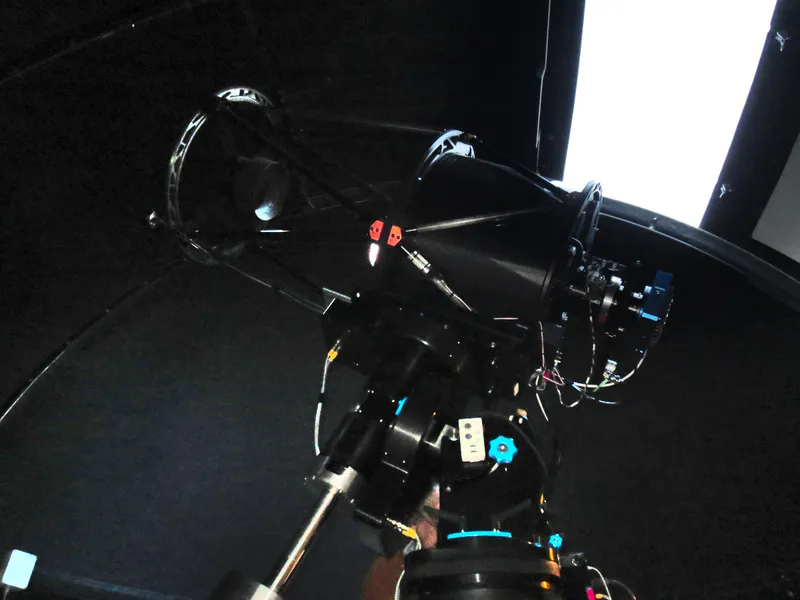
Shared Skies facilities at Mt. Kent were maintained by Rhodes Hart from this first installation until his untimely passing in 2020. With on-site technical support limited at this time, the priority is to operate the CDK700 for TESS, and return the CDK20 for use by classes in 2026.
This telescope was the original "Shared Skies" cornerstone, and it provided remote observing to the University of Louisville's Rauch Planetarium where pre-college classes came to a facility designed to provide an immersive experience. Our focus turned to supporting college students in the years that followed, to provide training for research and images and data for introductory astronomy classes. The potential of this telescope for education remains, and is currently under review. The German equatorial design requires a meridian "flip" when tracking an object overnight. This limits its precision for long duration photometry, but is not an issue for imaging, or when the target does not cross the meridian during the time of interest.